Updated September 17, 2026. Owner reviews are gear I own and have written up in full. Product pages are labeled as such and describe the gear from the maker's specs, not my hands.
A winter storm power outage kit is a bin in the garage and a short list of chores that let your family ride out a few cold, dark days at home. February 2021 showed Texas how fast a freeze can turn into a long outage. You do not need a bunker. You need safe heat, a way to charge phones, stored water, protected pipes, light for every kid, a radio, and food that works without a stove.
The simple rule for any kit: set it up on a calm day so nobody in the house has to think hard on a bad one.
The Quick Winter Storm Power Outage Kit Checklist
- A battery carbon monoxide alarm in the room where the family will sleep. Non-negotiable if any fuel burns in the house.
- One safe heat plan: layers, one closed-off room, and only an indoor-rated heater with fresh air, or no fuel at all.
- Charged power: a power station or power banks topped off before the storm.
- Water: one gallon per person per day, stored before the freeze.
- Pipes wrapped and outdoor faucets covered.
- A light for every person, plus a lantern for the room.
- A weather radio with batteries or a crank.
- Three days of no-cook food, a manual can opener and a cooler.
- First aid kit and a week of prescriptions.
Heat: Stay Warm Without Carbon Monoxide
Start here. Most gas furnaces need electricity to run the blower, so the house cools off even with gas service on, and cold families reach for whatever makes heat.
The rules from the CDC carbon monoxide guidance are short and worth taping to the fridge:
- Never heat the house with a gas oven.
- Never burn charcoal indoors, and never use a portable gas camp stove indoors.
- Only use a generator outside, more than 20 feet from any windows, doors and vents. Never in the house or garage, even with the door open.
- Install battery-operated or battery backup CO alarms near every sleeping area.
I cook a lot of BBQ, and the grill stays outside in the open air. Every time.
Your CO alarm comes first. The Kidde COB battery carbon monoxide alarm runs on AA batteries, so it keeps watching when the hardwired alarms may not. Kidde's instruction if it sounds: everyone out to fresh air and call 911.
If you want fuel heat, pick an indoor-rated one. The Mr. Heater Portable Buddy is listed by Mr. Heater as indoor safe, with an oxygen depletion sensor and tip-over shutoff. Its manual still calls for a fresh air opening, like a cracked window, every time it runs, and it does not replace the CO alarm above. Stock Coleman 16 oz propane cylinders for it and store them in a ventilated spot like the garage, away from the heater and never in the living space. Mr. Heater lists about 3 hours on high and 6 on low per cylinder, so count your nights before the stores empty out.
Fuel-free warmth covers the rest. Pick one small room, ideally with few windows, close the doors, and hang a blanket over the doorway. Everybody sleeps in there in layers with hats and socks. HotHands hand warmers go in pockets and gloves, never straight on skin, and Mart Cobra Mylar blankets layer under the comforter. Keep Mylar away from little faces and far from any heater.
If the house gets too cold to manage, or someone depends on powered medical equipment, go somewhere with power and heat. Ready.gov says to check with local officials about heating locations open near you. Going early is a smart call.
Power: Phones, Lights and a CPAP
The Jackery Explorer 300 is a battery power station with no engine and no exhaust, which is why it can sit inside. It is rated at 300W, so it handles phones, LED lights, a Wi-Fi router or a CPAP. It will not run a space heater, a fridge or a microwave. Charge it the week the forecast turns, then keep it full.
For each adult, a pocket power bank splits the load. The NITECORE NB10000 Gen4 and NITECORE NB10000 Gen 2 are small 10,000mAh packs, enough to top off a phone when the outlets are dead. Usable output is lower than the box number. Put your phones in low power mode the moment the lights go out.
A truck can charge phones too, but never idle it in the garage, even with the door up.
Water and Pipes: Store It, Then Protect It
A long Texas freeze can hit water twice: pipes split in the house, and city water pressure drops or a boil notice goes out. So you handle both.
Store water before the freeze. Ready.gov says to store at least one gallon per person per day for several days, for drinking and sanitation. A family of four covering three days needs 12 gallons. A two-pack of WaterStorageCube collapsible containers holds about 10.6 gallons with a spigot, so add a few jugs to cover the gap, and the cubes fold flat the rest of the year. Fill the bathtub too, for flushing toilets.
Keep a backup filter. The LifeStraw personal water filter is a drink-through straw rated for bacteria and parasites, not viruses or chemicals. During a boil notice, follow your water utility's instructions.
Protect the pipes. The weekend before, snap Duck Brand foam pipe covers onto exposed lines in the garage, attic and where pipes come out of the slab. Unhook garden hoses and put Hometopia outdoor faucet covers on the spigots. During the freeze, open cabinet doors under sinks on outside walls and let a faucet drip. Insulation slows freezing but adds no heat, so keep the drip going.
Know your main shutoff. Find it, show your spouse, and keep the tool next to it. A split pipe with no shutoff turns a cold week into a flooded one.
Light: One for Every Kid
Give every kid a light of their own.
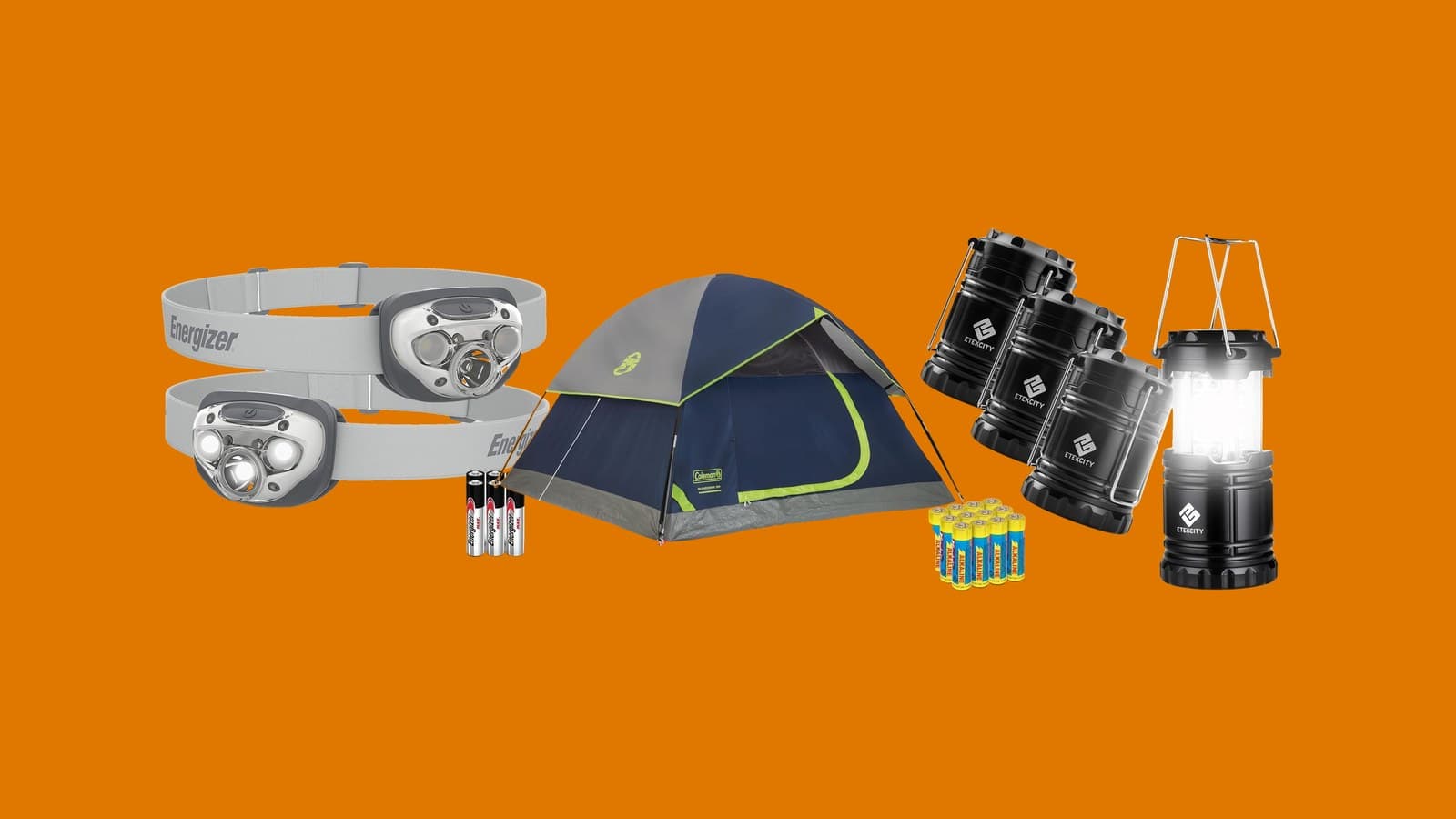
- Room light: the Etekcity LED camping lanterns come four to a box and run on AA batteries. One for the kitchen, one for the bathroom, one per bedroom. No candles near kids, blankets or curtains.
- Kid headlamps: the Energizer LED Headlamp PRO two-pack runs on AAA and the band cinches down small, so bathroom trips at night stop being a group event.
- Dad headlamp: the NITECORE NU25 MCT UL is light and rechargeable over USB-C, and the Fenix HM65R-T V2 is a brighter rechargeable option for checking pipes in the attic or garage.
Buy the batteries now, before the forecast sends everyone else to the store.
Communication: Know What the Grid Is Doing
Cell service can get spotty in a long outage, and a phone at 8% is not a news source. Build in two ways to stay informed.
A weather radio. The Midland ER310 has a NOAA alert mode that stays quiet until the National Weather Service sends a warning, then sounds. The FosPower A1 is a smaller solar and crank radio that also runs on AAA batteries, a good second radio for the truck.
Grid alerts from ERCOT. Sign up for ERCOT's TXANS alerts by email or through the ERCOT app. ERCOT sends a Weather Watch about 3 to 5 days ahead of forecasted significant weather and high demand, and that is your signal to charge, fill and wrap. For statewide preparedness, TexasReady.gov from the Texas Department of State Health Services and TDEM's preparedness page are the state sources.
A family plan on paper. Where you go if the house gets too cold, who checks on grandparents, one out-of-town contact.
Food: Eat Cold, Keep the Fridge Shut
The food numbers are easy to remember. Ready.gov says a closed fridge keeps food cold about 4 hours and a full freezer about 48 hours, and USDA puts a half-full freezer at about 24. Throw out food that has been at 40 F or higher for two hours or more, or that smells or looks off. Keep the doors shut, and freeze jugs of water ahead of time to add cold mass.
The cooler buys time. This one is owner gear. I own two YETI Tundra 45 coolers, and one sat in my truck at a Colorado trailhead for four days and still had ice in it. In an outage, move the milk, meds that need cold and the kids' favorite stuff into the cooler so the fridge door stays closed.
Plan three days of no-cook food. Peanut butter, crackers, canned chicken and beans, cereal, shelf-stable milk, fruit cups, granola bars. Pack some protein so the snacks actually hold everyone over. Add a manual can opener, paper plates and baby or pet food if you need it.
Cooking outside only. The CDC says never use a portable gas camp stove indoors. A stove like the Camp Chef Explorer runs outside in open air, same as the grill. Never in the garage or kitchen.
First aid. Ice means falls. Keep the First Aid Only FAO-442 kit in the house bin and a week of prescriptions filled before the storm. Ready.gov says if the power is out for more than a day, discard medication that should be refrigerated unless the label says otherwise, and call your doctor or pharmacist for a new supply.
Pre-Storm Checklist Table
Print this one. Start it when ERCOT or the National Weather Service posts a watch.
| When | Job | Gear |
|---|---|---|
| Before winter | Test CO alarm, buy batteries | Kidde COB alarm |
| Before winter | Wrap exposed pipes | Duck Brand pipe covers |
| Before winter | Find main water shutoff | Shutoff tool by the valve |
| 3 to 5 days out | Sign up for alerts, stock propane | TXANS, Coleman cylinders |
| 2 days out | Charge power station and banks | Jackery Explorer 300, NB10000 Gen4 |
| 2 days out | Fill water, fill prescriptions | WaterStorageCube |
| 1 day out | Cover spigots, unhook hoses | Hometopia covers |
| 1 day out | Lights and radio on the counter | Etekcity lanterns, Midland ER310 |
| 1 day out | Freeze water jugs, prep the cooler | YETI Tundra 45 |
| Power out | One warm room, CO alarm in it | HotHands, Mylar blankets |
| Power out | Drip faucets, open sink cabinets | None |
Common Questions
Is it safe to use a propane heater indoors during a power outage? Only a heater the maker rates for indoor use, used exactly as the manual says, with a fresh air opening and a battery CO alarm in the same room. Outdoor patio heaters, grills and camp stoves never come inside.
How long does food last in the freezer without power? About 48 hours for a full freezer per Ready.gov, and about 24 for a half-full one per USDA, if the door stays closed. A fridge keeps food cold about 4 hours.
How do I keep pipes from freezing when the power is out? Insulate exposed pipes before the storm, cover outdoor faucets, open cabinets under sinks on outside walls and let a faucet drip. If a pipe splits, close the main shutoff right away.
How do I know if ERCOT is calling for conservation? Sign up for TXANS alerts at ERCOT.com or in the ERCOT app. A Weather Watch is the early heads up.
Related Guides
- Truck Emergency Kit Checklist for icy roads.
- Camping With Little Kids Checklist for the gear that pulls double duty.
- Garage Tools for a New Homeowner for the shutoff and pipe work.
Set it up on a calm Saturday, and the next ice storm is just a long weekend of board games by lantern light. Carry what matters.
Every Dad Carry is reader-supported. Links on this page may earn us a commission at no extra cost to you. As an Amazon Associate we earn from qualifying purchases.